Count a collection of shells, then say how many
Set up a Counting Collection where young learners tap eight scattered shells one at a time, see each one numbered, and then answer "How many?". Berdee notes how each child counted, not just the answer.
- Level
- Beginner
- Time
- About 10 min
- Steps
- 7
- Updated
- Oct 15, 2026
A "How many shells?" scene where students tap 8 shells on a patch of sand, each shell shows its number as it's counted, a second tap on a shell only wiggles it, and tapping 8 moves the lesson on to the ending.
Get the finished lesson
Skip straight to the result, or keep it open beside the steps. Add this tutorial's lesson to your account and explore how it works in the studio.
Free to sign up, and you'll come straight back here. I have an account
Counting collections are a staple of kindergarten math: a child gets a pile of shells, buttons or bears, counts them one at a time, and says how many there are. How they count tells you as much as the answer does: did they touch each shell once, keep track of which ones they'd counted, and answer with the last number they said?
In this tutorial you'll build a one-scene activity called Shells on the beach. Students tap each of eight scattered shells. Each tapped shell shows its number, and Berdee says the number aloud. When every shell is counted, How many? appears with five numerals to choose from. Tapping a shell a second time doesn't count it again. It wiggles instead, and Berdee notes the repeat for you.
Step 1: Set the scene
Start a blank lesson (New lesson, then Start from scratch) and name it Shells on the beach by clicking Untitled lesson at the top left.
Give the scene a seaside background. Click an empty spot on the scene, open Background, click Choose a style, and pick Lagoon gradient. Give the Closing Scene the same background so the ending matches.
Then add the question and the task:
- A Heading at the top:
How many shells?. Set its Font Size to44. - A Body under it:
Tap each shell once to count it. Then tap how many.Set it to Fixed width, about720wide, then set its Font Size to24.
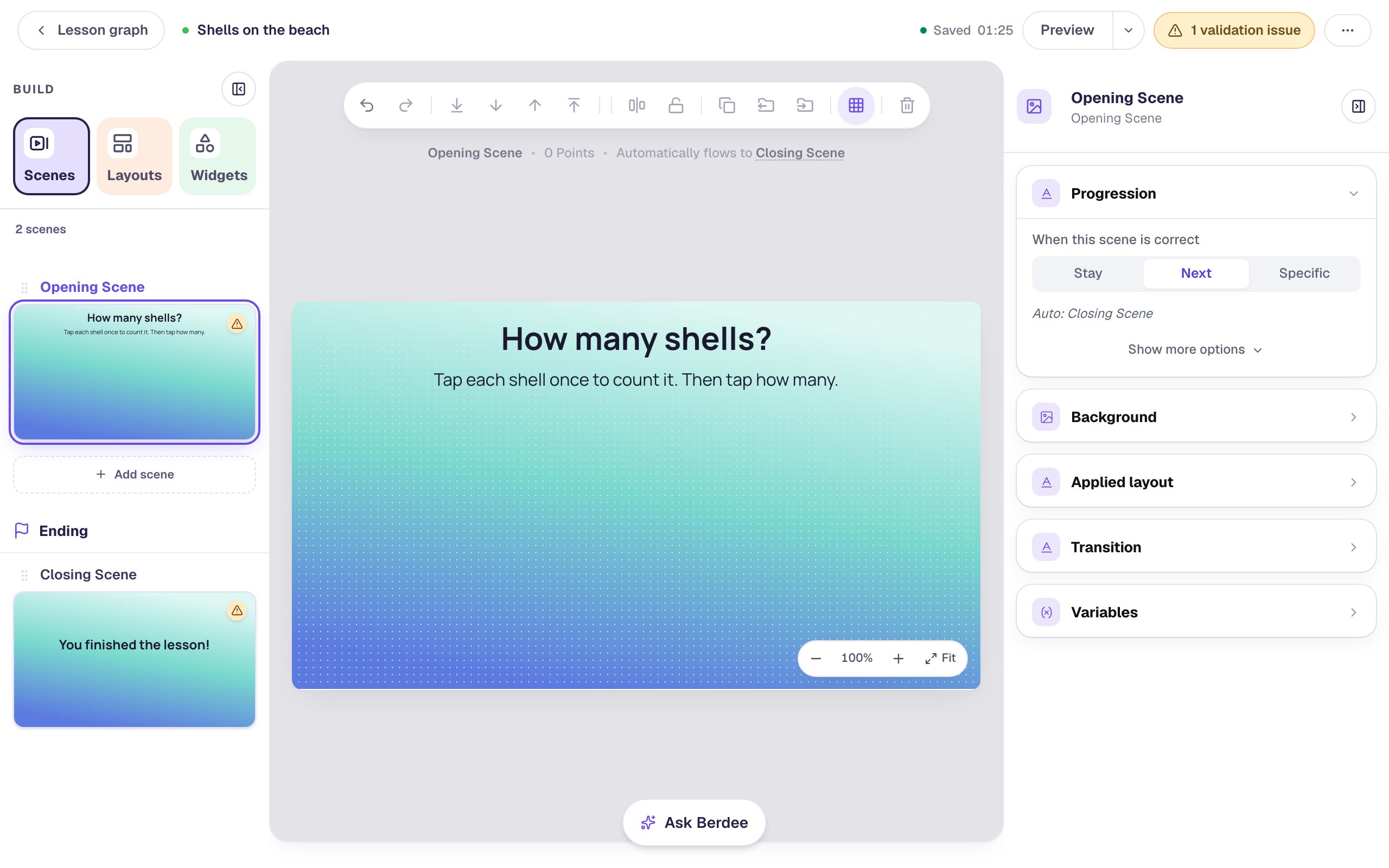
Keep the instruction short so you can read it aloud to the class.
Step 2: Add a Counting Collection
Search the Widgets tab for Counting Collection and click it. It arrives with six empty circles: the places where your objects will go once you choose a picture.
Under Style & Layout, click Show more options and set Width to 640 and Height to 340, then drag it to the left, under the instruction. That leaves room on the right for a button later. Then set its Background color to a pale sand yellow, so the shells sit on a beach instead of a gray box.
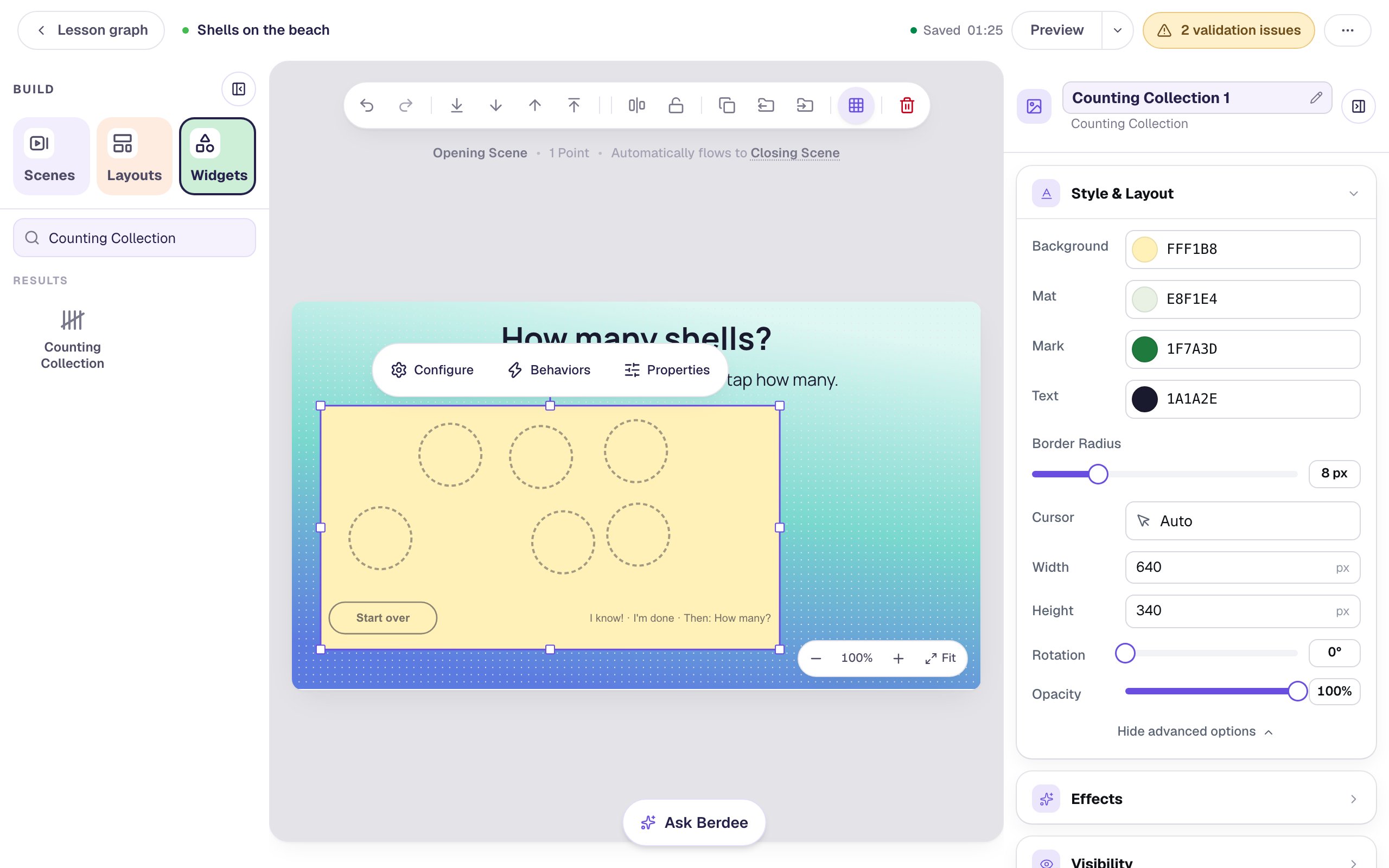
Keep the collection big. Each shell has to be easy for a small finger to tap, and the Configure window warns you if the objects get too small.
Step 3: Choose the shell and name it
Click ⚙ Configure in the pill above the collection. The window has the settings on the left and a live preview on the right.
- Leave Mode on Tap to count.
- Under Object, click Choose a picture (a shell, a button, a bear…) and pick a picture of one shell. A picture with a transparent background looks best, because it's placed on the sand many times. Upload your own from the Upload tab, or pick one from your media library.
- Under Called, type
shell. The second box fills inshellsby itself.
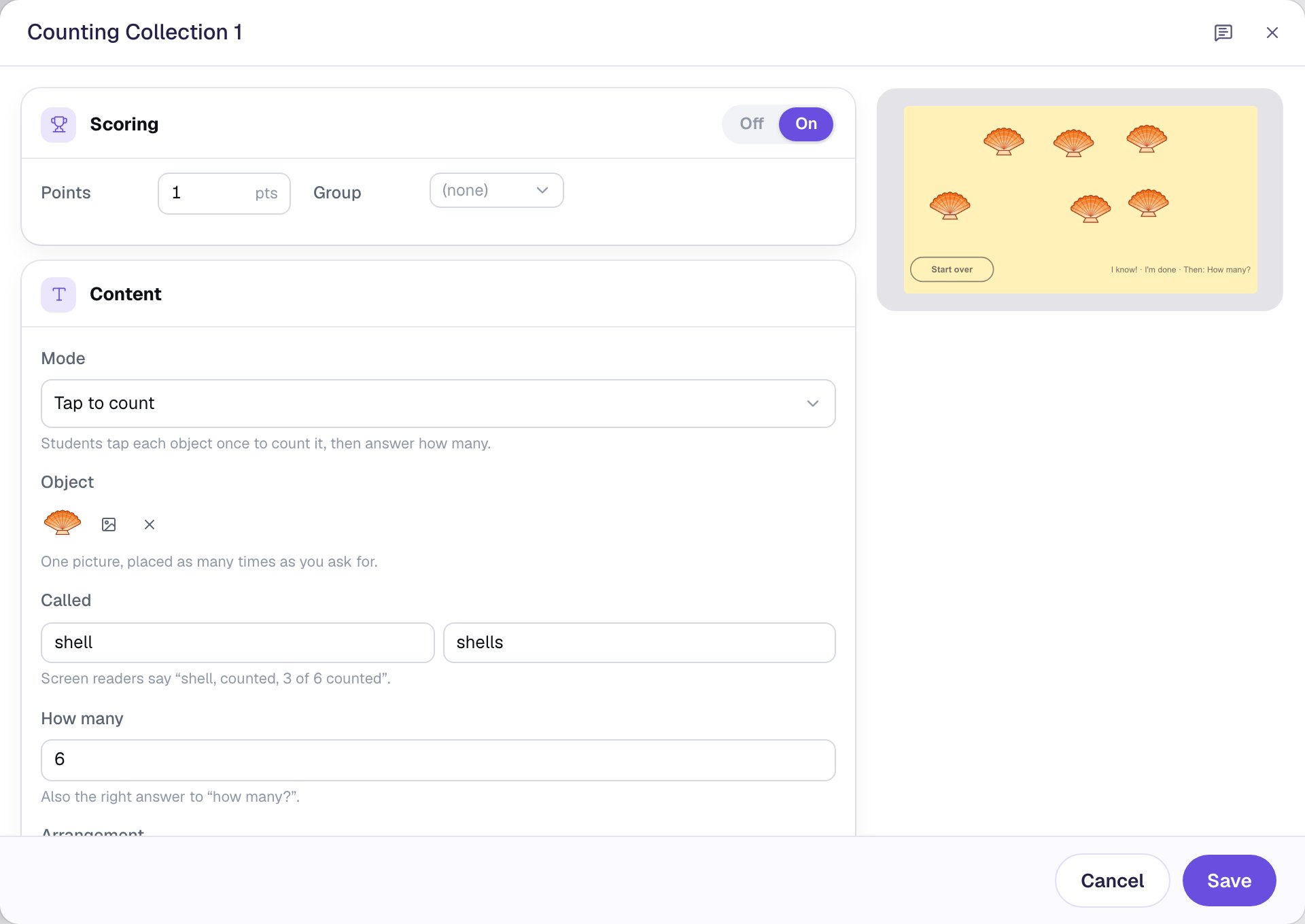
Called matters more than it looks. It's how a student using a screen reader hears each object ("shell, counted, 3 of 8 counted"), so it does the job alt text does for a picture. Leave it on object and those students hear "object" eight times.
Step 4: Ask for eight shells, numbered as they're counted
Scroll down in the same window:
- Set How many to
8. This is also the right answer to "How many?". - Leave Arrangement on Scattered. A scattered pile is harder to keep track of than a line, and that's what children need to practice. Press Shuffle if you'd like a different scatter. Every student sees the same layout.
- Under Counted objects show, click Their number. Each shell then shows the number it was counted as, so children see "1, 2, 3…" build up as they go.
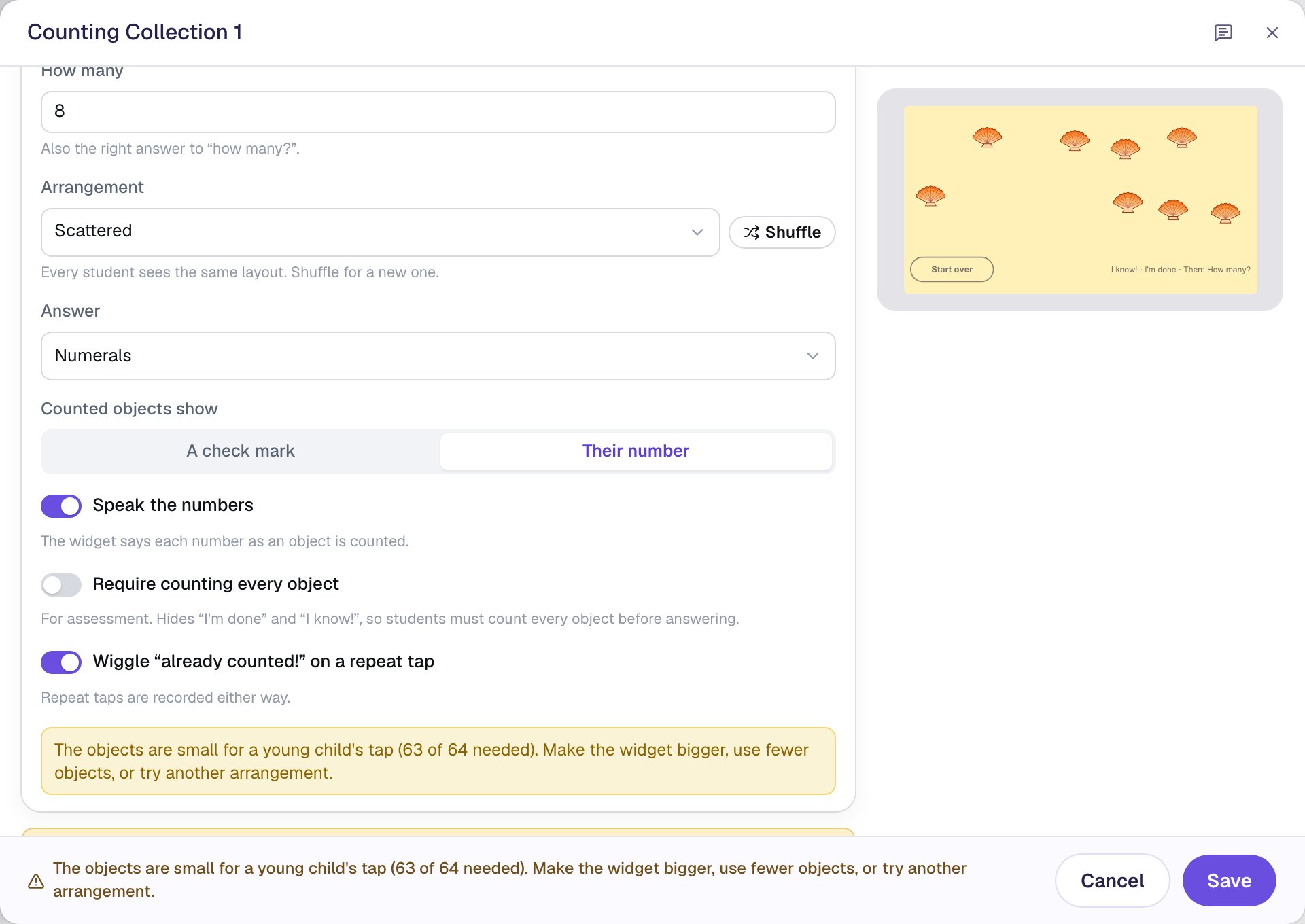
Speak the numbers is already on, so Berdee says each number as a shell is counted. Turn it off on a later collection once children should say the numbers themselves. Answer stays on Numerals: students answer "How many?" by tapping a numeral, and that answer is graded.
Leave Require counting every object off for everyday practice. Students can then press I know! before they start, to answer at a glance, or I'm done once they've started, to stop early. Turn it on when you want a check where every shell has to be counted first.
Click Save.
Step 5: Give students a moment to see their answer
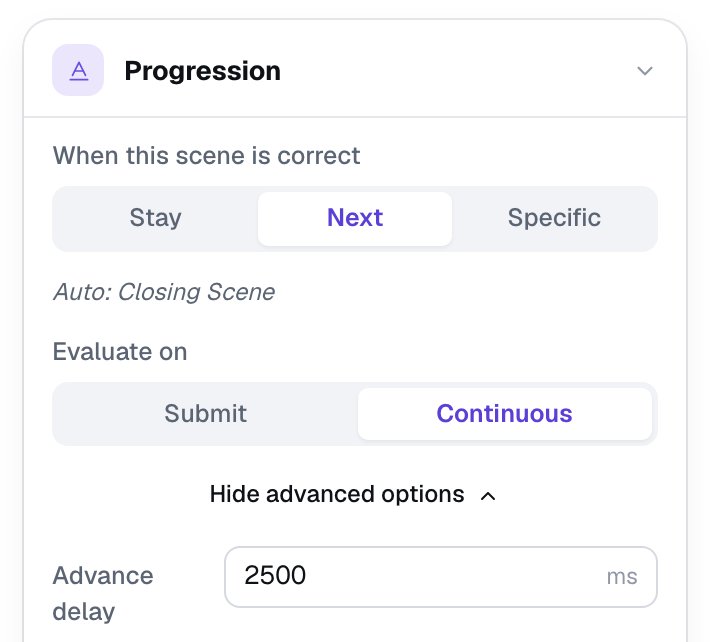
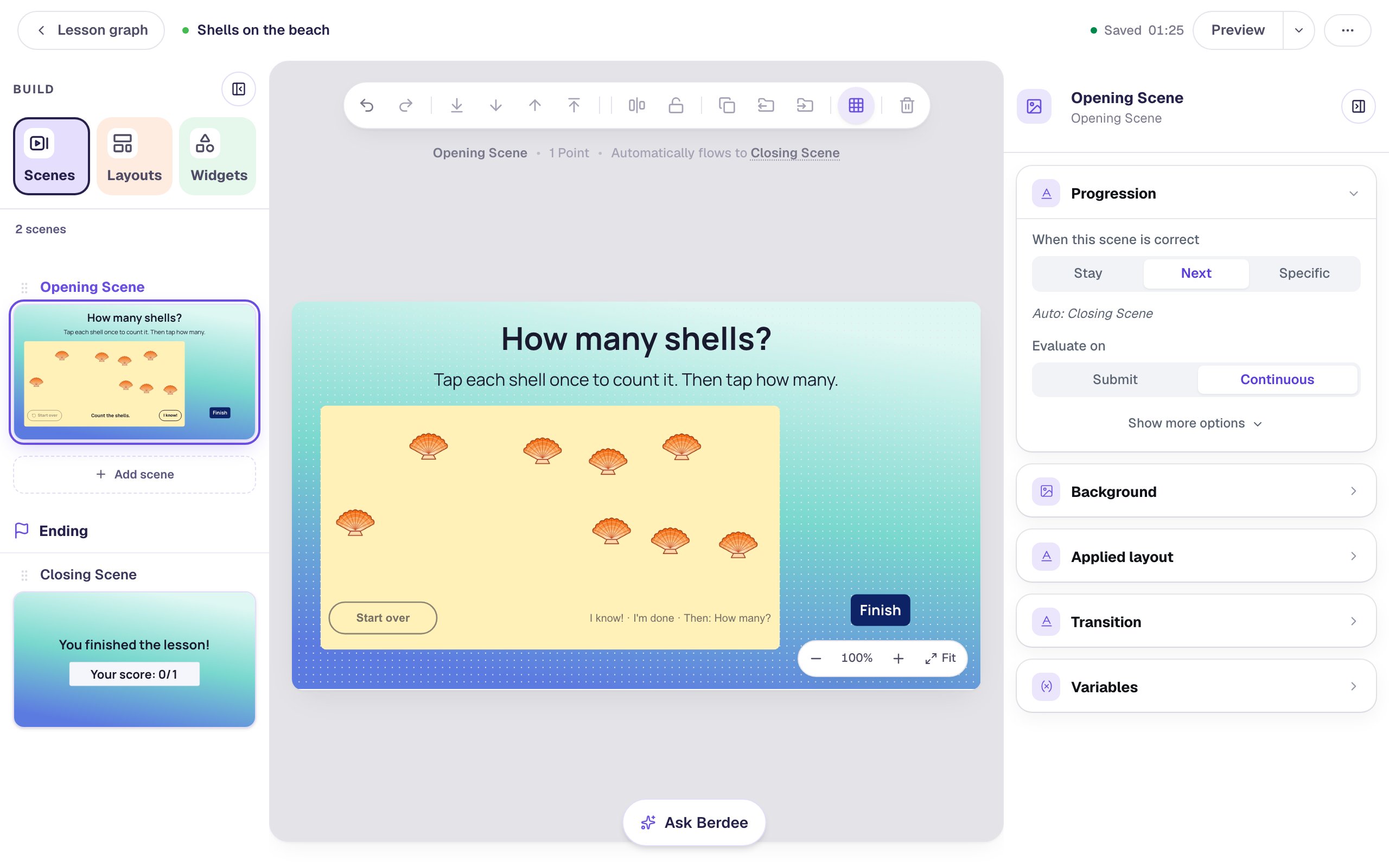
The scene moves on by itself as soon as the answer is right. The line above the canvas says Automatically flows to Closing Scene. By default it waits only 0.6 seconds, which is too quick for a child to see their answer light up.
Click an empty spot on the scene to see its settings. In Progression, click Show more options and set Advance delay to 2500 ms (two and a half seconds).
Step 6: Add a Finish button
Every lesson needs one button that ends it, even a lesson that moves on by itself. It's also a way out for a student who gets stuck.
- Search the Widgets tab for
Submit Buttonand click it. - In Content, change Label to
Finishand set Submits to Lesson. - Set its Font Size to
20, give it a dark navy Background and white Text, and drag it to the right of the collection.
Don't call it "I'm done": the collection already has its own I'm done button for students who stop counting early, and two buttons with the same name would be confusing.
Step 7: Count as a student
Click Preview. The collection says Count the shells., with an I know! button for a child who can see the amount at a glance. Count the shells from left to right. After the third shell, tap the second one again, as a child who's lost track might:
The repeat tap doesn't count shell 2 twice. It gives a quick "already counted!" wiggle, and the count carries on from 3. Once all eight are counted, How many? appears with five numerals.
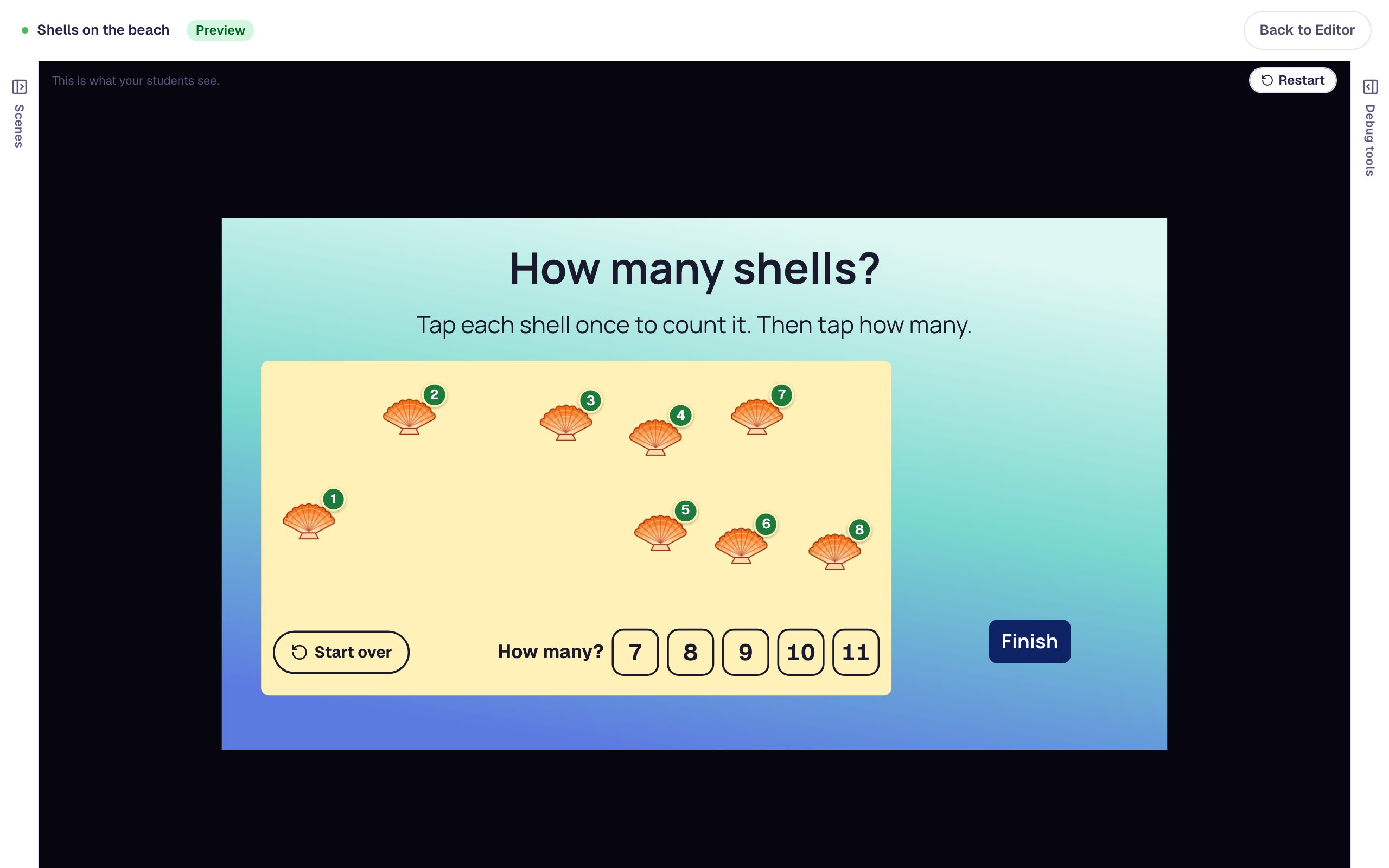
The right answer is always one of the five numerals, but not always the middle one, so a child can't get it right by guessing the middle.
Tap 8:
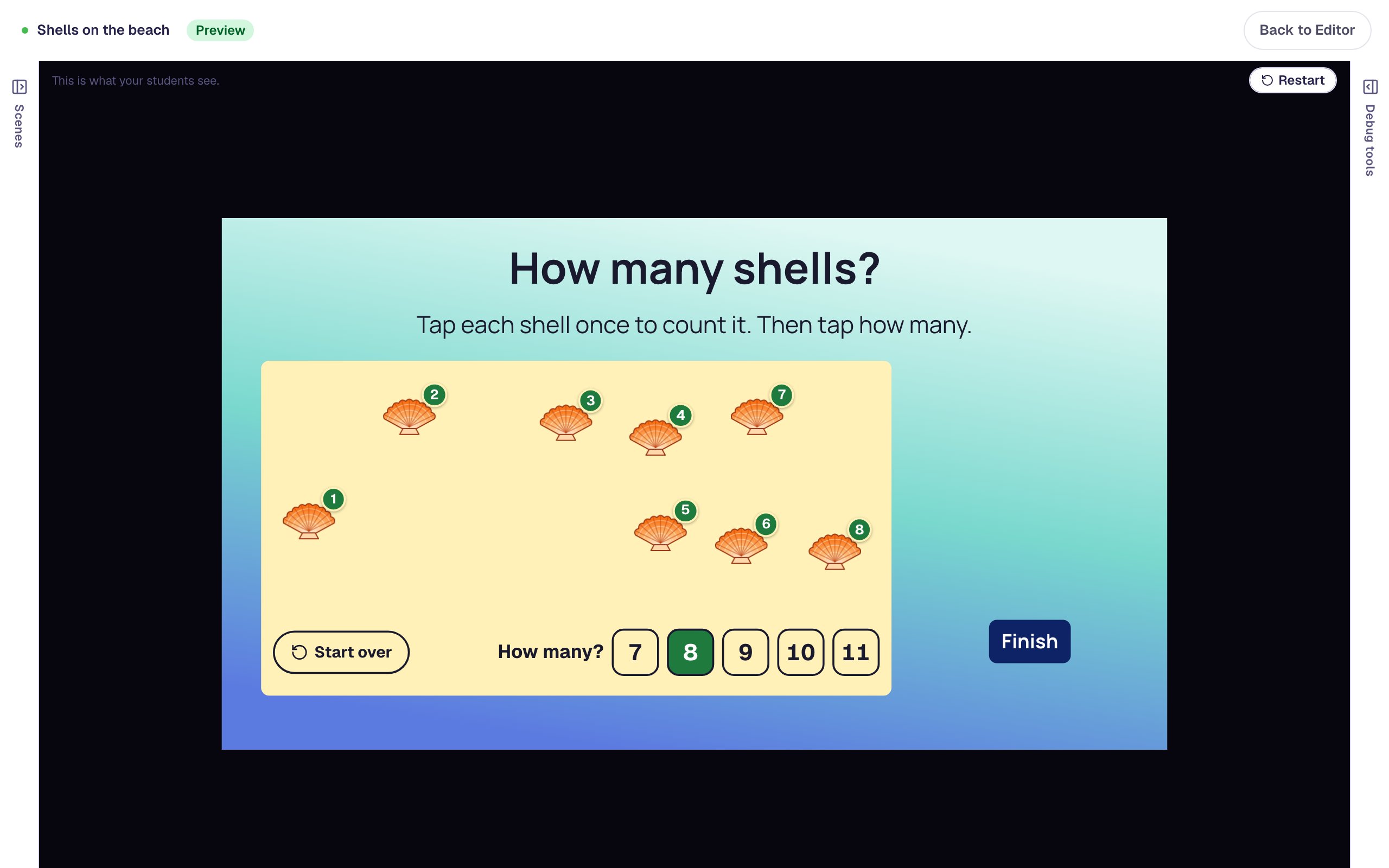
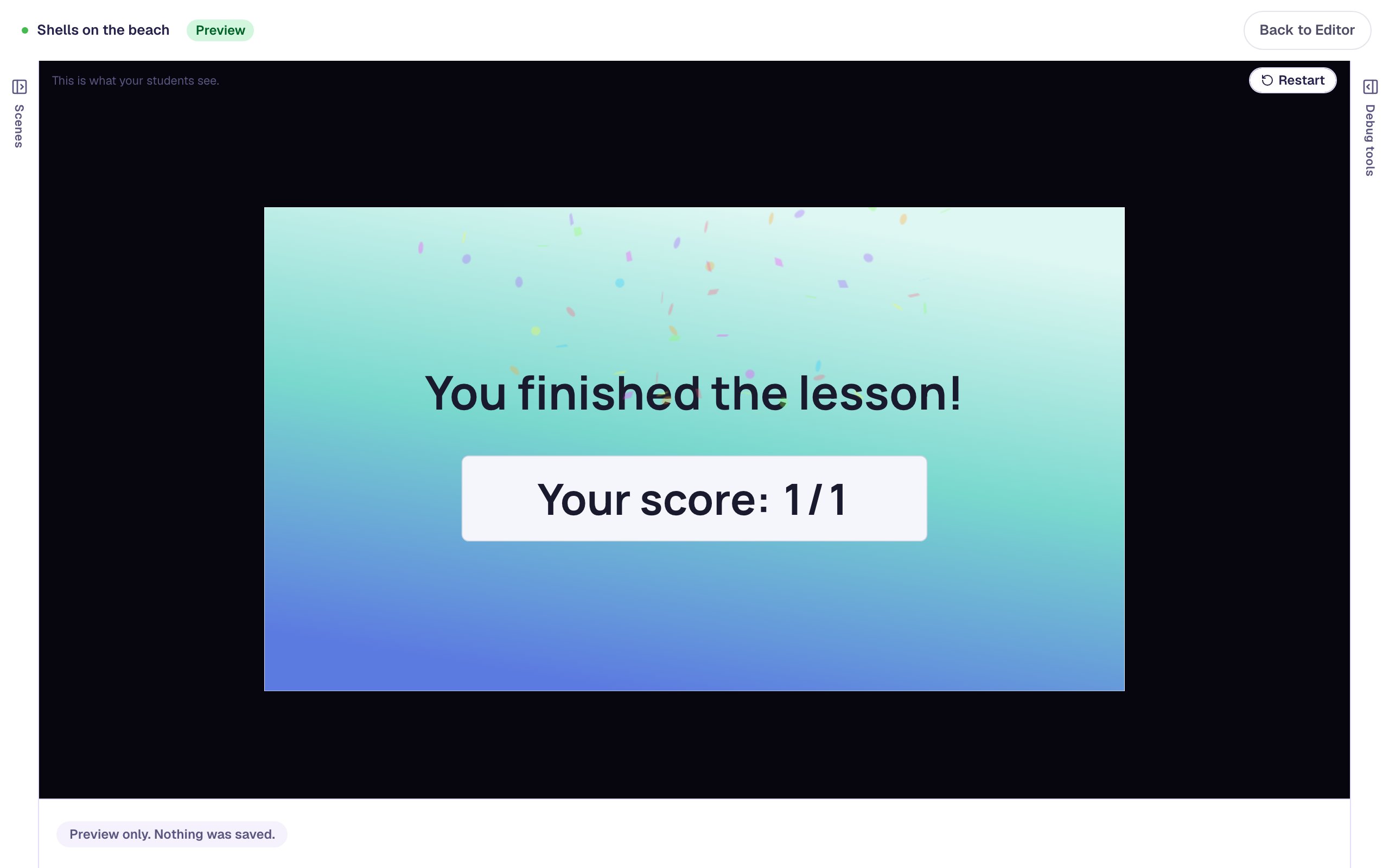
How a student counted never changes the grade: the repeat tap here still scores 1 out of 1. It's information for you. On each student's attempt page, the collection gets one line in counting-interview words, such as "Counted 8 of 8 · tapped 1 object twice · answered 8". Click Restart to try I know! or I'm done, or to answer 9 and see that the lesson waits for the right answer. A student who answers 9 before 8 gets "first answered 9" at the end of their line, so you can tell them apart from a student who said 8 the first time.
What you built
You built a one-scene counting activity with:
- a Counting Collection in Tap to count mode with 8 scattered shells,
- Called set to
shell, so screen readers name each one, - each shell showing its number as it's counted, with numbers spoken aloud,
- a repeat tap that wiggles instead of counting twice, and is noted on the attempt page,
- a longer Advance delay so students see their answer, and a Finish button as a way out.
For children who keep losing track, make a second scene with the collection's Mode set to Move to count: a counting mat where each shell is moved from Not counted to Counted. The Counting Collection Widget article shows how to send only the students who tapped a shell twice there. To have children build a number instead of counting one, try Build a number on a ten frame.
Make this lesson yours
Add the lesson you just watched being built to your account, then change it for your class: your questions, your pictures, your colors.
Free to sign up, and you'll come straight back here. I have an account